

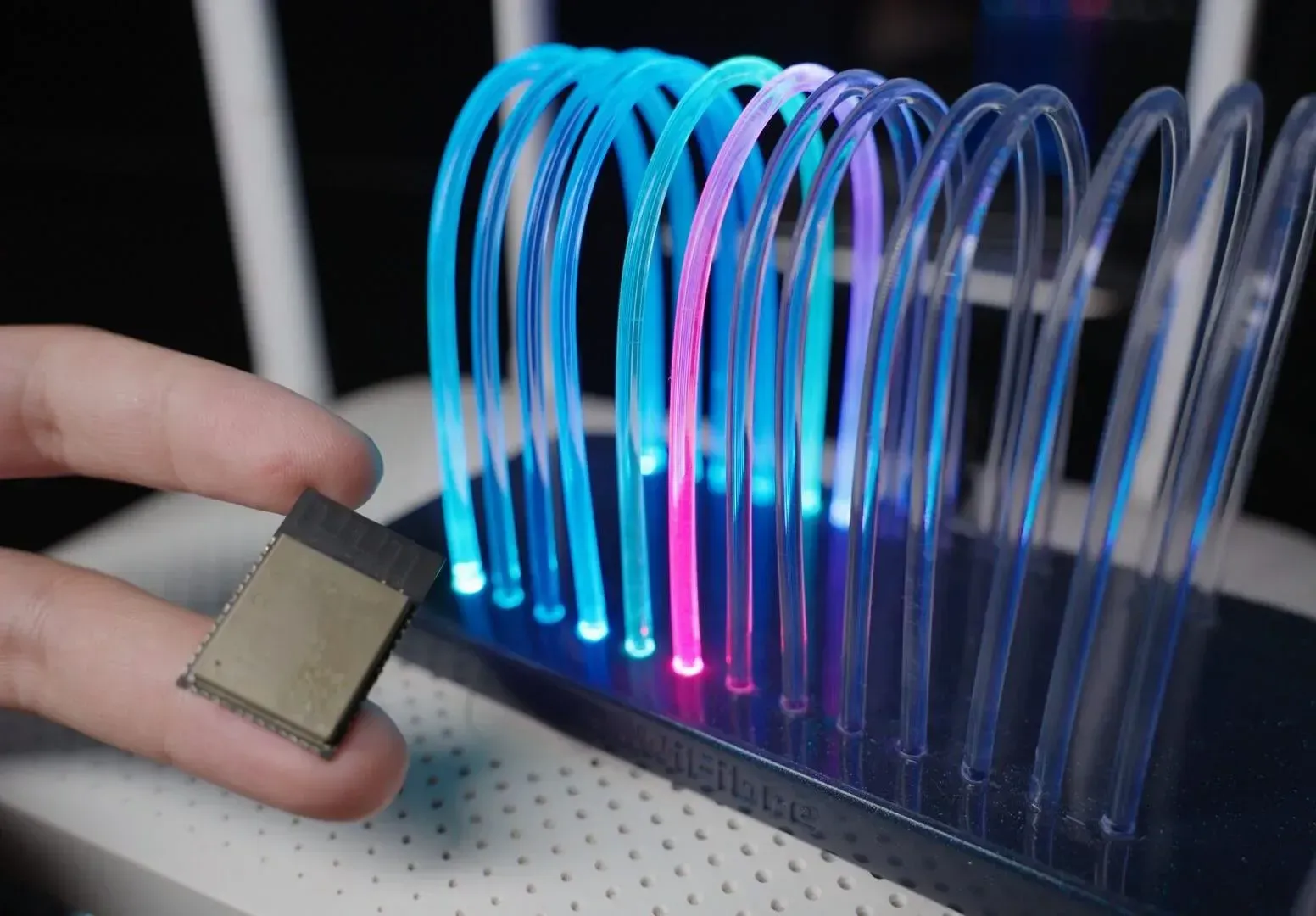
 Completed
I Built a Mood Light That Can See WiFi Signals!
PROI Built a Mood Light That Can See WiFi Signals!
License
:CC BY-NC-SA 3.0
Description
We’re all familiar with those little blinking LEDs next to the Ethernet ports on computers and routers. They flash seemingly at random—but in fact, they indicate real-time network activity. So I thought—what if Wi-Fi had a "signal light" too? That’s why I DIYed a Wi-Fi sniffer that captures wireless data and visualizes it using code and algorithms. The result? A real-time ambient light display that reacts to Wi-Fi signals.
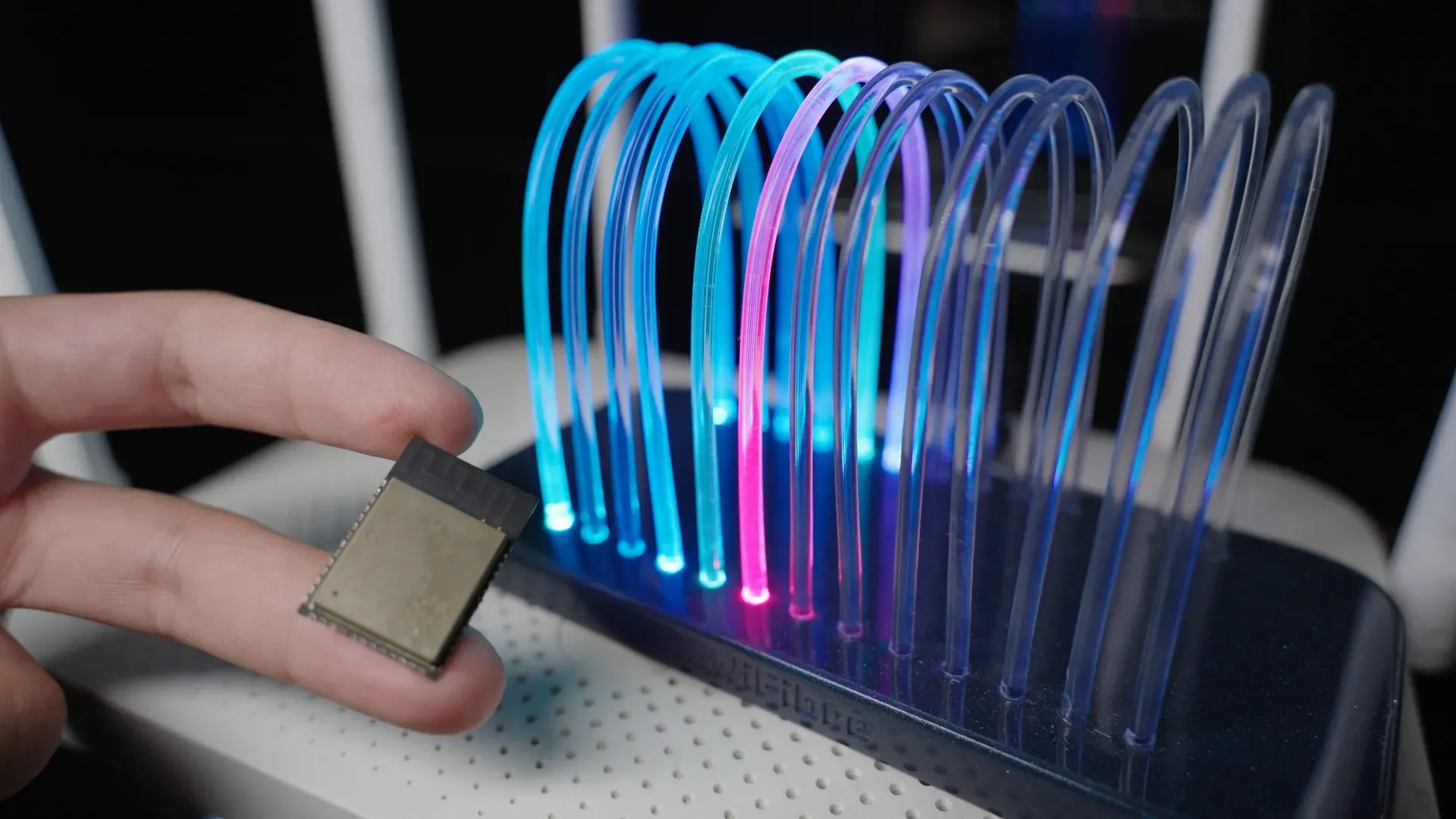
So here is the video (English Subtitle available):
At first, I didn’t have a clear idea of how to represent the data using RGB lights, so I started with the physical design. I used side-emitting light guides to create an arched structure, which ended up looking pretty sleek.
I built three display modes:
- Wi-Fi Channel Scan Mode – It cycles through all 13 Wi-Fi channels. Channels with heavier traffic and stronger signals appear brighter and redder; quieter channels show up as dimmer and more blue.
- Local Network Traffic Visualization – Each side of a light segment represents the upload and download traffic of a single device. I also asked AI for fun feature ideas, and it suggested an "Intruder Alert Mode"—so I added that: whenever a new device joins the Wi-Fi network, the lights flash red as a warning.
- Wi-Fi Signal Strength Display (RSSI Mode) – This mode visualizes signal coverage in different areas, helping you identify Wi-Fi dead zones.
Design Drawing
 The preview image was not generated, please save it again in the editor.
BOM
 Bom empty
 Clone
CloneProject Members

 Empty
Empty
Comment